Week 2
Theory and Practice
Soci—316
Measuring Abstractions–
September 8th
A Few Reminders
Add/Drop
The “shopping period” will
end on Thursday.
A Few Reminders
Research Memo Deadline
Deadline for Memo on Research Interests
Memos are due by 8:00 PM on Friday, September 18th.
High-Level Overview Theories, Concepts, and Measurement
The Role of Theory
A scientific definition of theory is a sequential argument consisting of a series of logically related statements put forward to illuminate some element of social life. In this definition, a theory is a well-articulated and well-reasoned supposition about a social phenomenon that moves logically and systematically from one point to related points and to a conclusion or expectation.
(Carr et al. 2020:35, EMPHASIS ADDED)
Theory and Method
What is the relationship between
theory and empiricism?
Levels of Analysis
Click Image to Expand
Deduction vs Induction
A Stylized Example of Deductive Inference
Deduction vs Induction
A Stylized Example of Inductive Inference
Concepts to Measurement
How do we move from
conceptualization to measurement?
Concepts to Measurement
The Standard Model
1
Conceptualization
How abstract variables/constructs are to be defined or understood theoretically
2
Operationalization
How variables/constructs will be concretized as indicators in empirical settings
3
Measurement
How theoretically derived instruments are applied to real-world data
This is, of course, a ratherstylized model.
Concepts to Measurement
Let’s pause for 10 minutes. Before we move on, jot down the core concepts that might undergird your research proposal. Then, note how you might operationalize each concept of interest. Finally, list the data you’d need to measure or capture key variables and constructs.
Concepts to Measures
10:00
0 words
Examples Transcending a “General Linear Reality”
A General Linear Reality
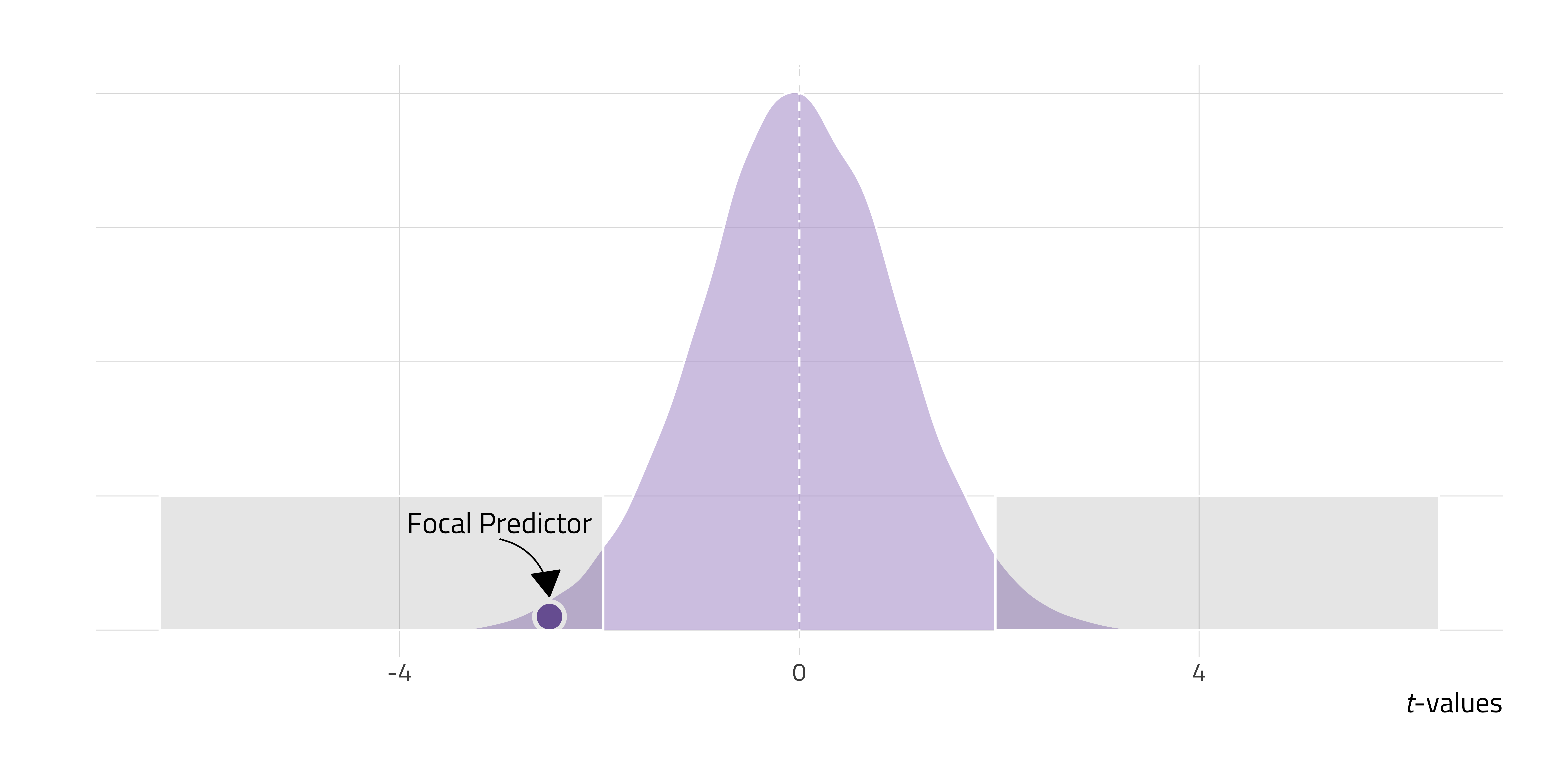
How could you interpret this plot?

A General Linear Reality
Whoops.

A General Linear Reality
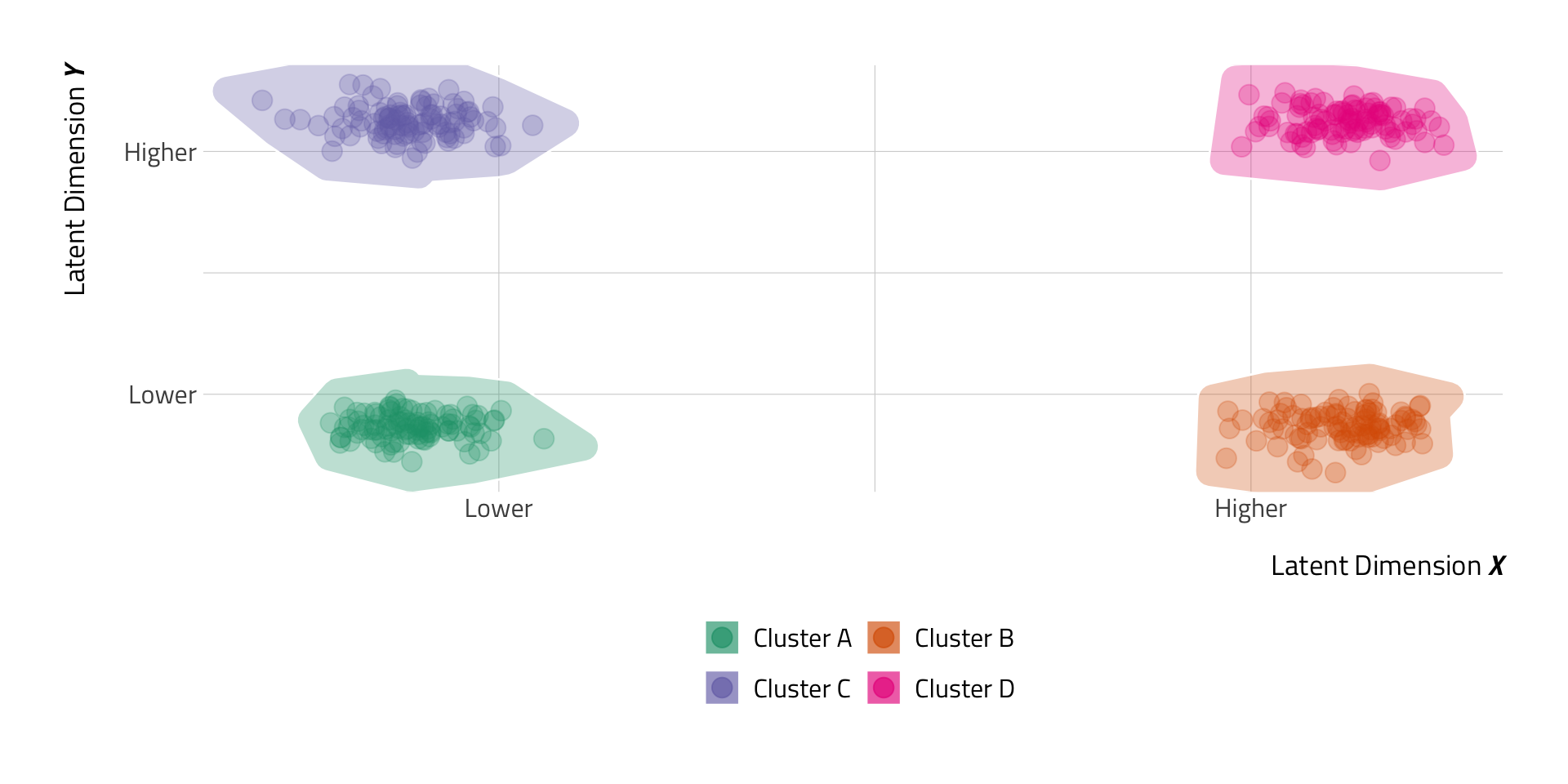
How could you interpret this plot?

A General Linear Reality
But … what if these 10 beliefs necessarily bundle together in practice?

Challenging the General Linear Reality
To use such a model to actually represent social reality, one must map the processes of social life onto the algebra of linear transformations. This connection makes assumptions about social life—not the statistical assumptions required to estimate the equations, but philosophical assumptions about how the social world works.
(Abbott 1988:170, EMPHASIS ADDED)
Challenging the General Linear Reality
Such representational use assumes that the social world consists of fixed entities (the units of analysis) that have attributes (the variables). These attributes interact, in causal or actual time, to create outcomes, themselves measurable as attributes of the fixed entities. The variable attributes have only one causal meaning (one pattern of effects) in a given study, although different studies may assign similar attributes different meanings. An attribute’s causal meaning cannot depend on the entity’s location in the attribute space (its context), since the linear transformation is the same throughout that space. For similar reasons, the past path of an entity through the attribute space (its history) has no influence on its future path, nor can the causal importance of an attribute change from one entity to the next. All must obey the same transformation.
(Abbott 1988:170, EMPHASIS ADDED)
Transcending a General Linear Reality
Click Image to Expand
Brainstorming Session
Theoretical Synthesis
Get into groups of 2-3. Then, develop a basic research question that integrates your research interests.
To this end, answer the following items:
What are some of the key concepts implicit in your question?
How can you translate these concepts into analytic units?
Develop a crude theory to facilitate operationalization?
See You Thursday
References
Note: Scroll to access the entire bibliography
Abbott, Andrew. 1988. “Transcending General Linear Reality.” Sociological Theory 6(2):169–86. doi: 10.2307/202114.
Broćić, Miloš, and Sakeef M. Karim. 2026. “Culture War and Interpretive Contestation: Documenting Lay Theories of the ‘Woke’ Phenomenon.” Working Paper.
Carr, Deborah S., Elizabeth Heger Boyle, Benjamin Cornwell, Shelley J. Correll, Robert Crosnoe, et al. 2020. The Art and Science of Social Research. Second Edition. New York: W. W. Norton & Company, Inc.
DellaPosta, Daniel. 2020. “Pluralistic Collapse: The ‘Oil Spill’ Model of Mass Opinion Polarization.” American Sociological Review 85(3):507–36. doi: 10.1177/0003122420922989.
Karim, Sakeef M. 2024. “The Organization of Ethnocultural Attachments Among Second- Generation Germans.” Social Science Research 118:102959. doi: 10.1016/j.ssresearch.2023.102959.
O’Brien, Shay. 2026. “Kinship Interlocks: How the Intimate Exchange of Wealth, Status, and Power Generates Upper-Class Persistence.” American Sociological Review 91(2):191–226. doi: 10.1177/00031224261425688.